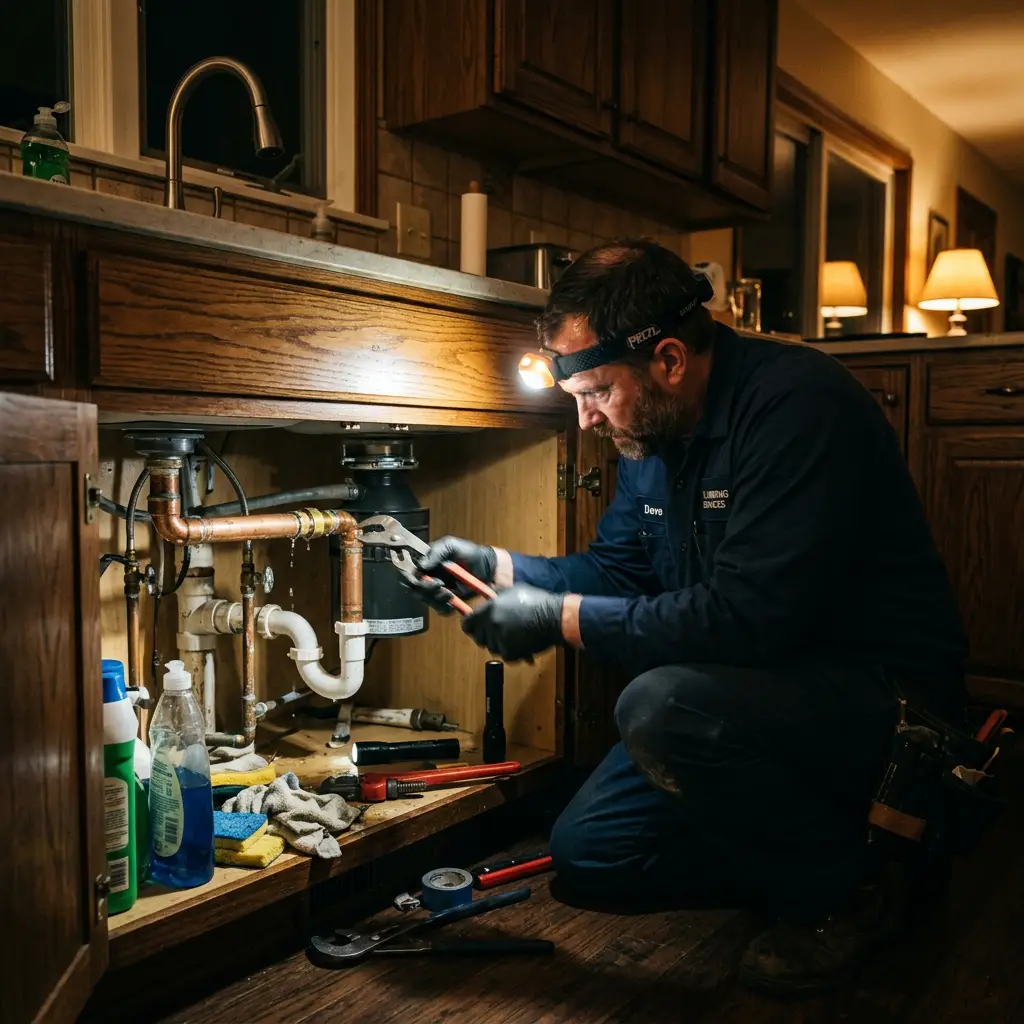
Residential Emergency Plumbing
Emergency plumbing for single family homes, from the kitchen to the yard and everything between.
Read about Residential Emergency Plumbing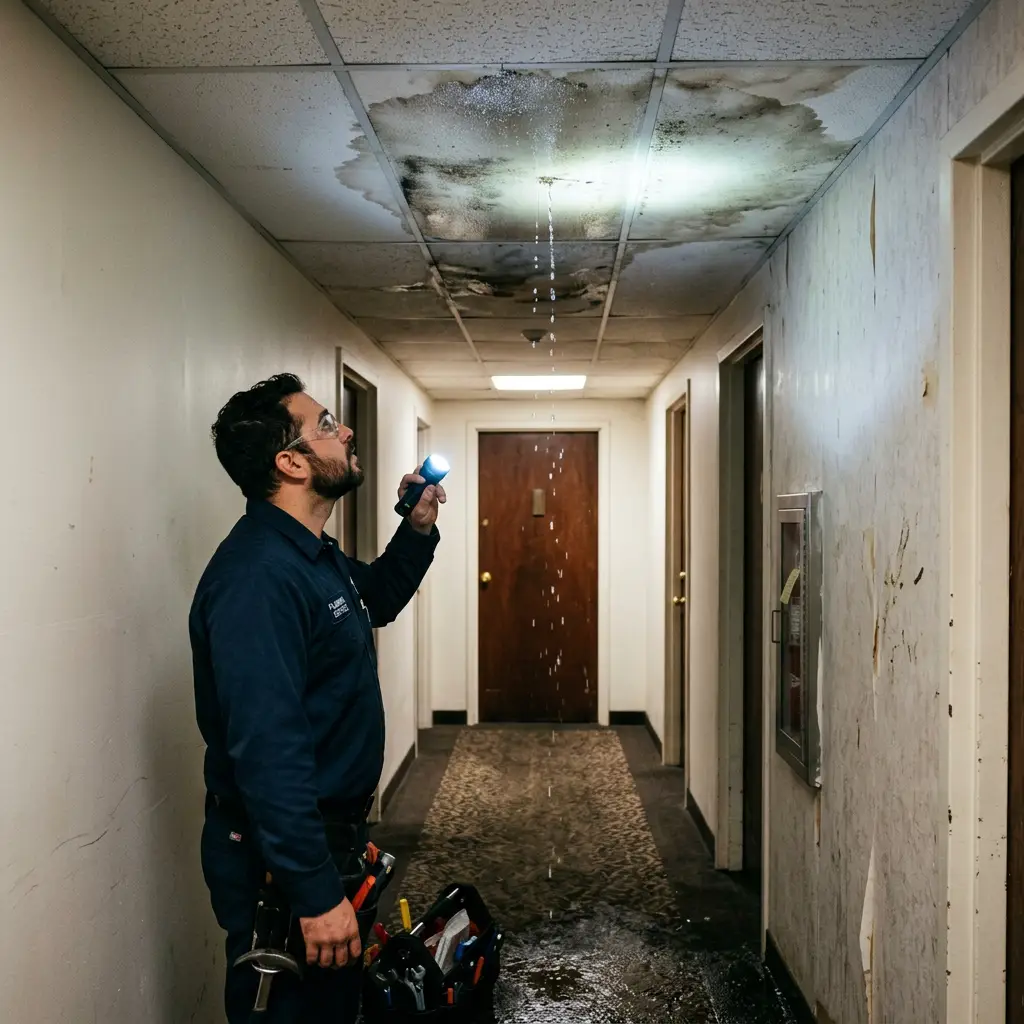
Plumbing in a shared building works differently. This page explains how apartment emergencies spread, who needs to know and how to limit damage.
In an apartment, a single failed pipe can affect the units below, beside and above you. Water travels through shared walls, ceilings and stacks, so what starts as a leak under your sink may show up as a stained ceiling in a neighbor's home an hour later.
Responsibility can also be unclear. Pipes inside your unit, shared risers and building wide shutoffs may be handled by different parties. Acting quickly, telling the right people and documenting the problem protects you and your neighbors.
Each situation below falls inside this service. Your problem may touch more than one, and the plumber will sort out which part must be handled first.
Water traveling between floors from a failed pipe, fixture or appliance.
Wastewater rising in lower units because of a blockage in a shared line.
Locating and repairing valves that isolate a single apartment.
Compact heaters and appliance hoses in closets and kitchens.
Tracing water from the unit above back to its source.
The exact work depends on what is found, but an emergency visit generally follows this order.
Close the shutoff valve for your unit or the fixture, if you can reach it.
Tell building management and neighbors who may be affected.
The plumber traces the water to the failed pipe, fixture or shared line.
The repair is made, and the findings help explain what happened.
Apartment emergencies involve people as well as pipes. Clear communication, with a plain description of what happened and when, keeps everyone informed and helps work get approved faster. If you are the person who rents, check your lease for who handles plumbing repairs, and share the plumber's findings with the building.
Close the valve you can reach, then tell building management and any neighbors who may be affected.
Yes. Water can travel through ceilings and walls into adjacent homes.
The same issues apply in shared buildings of many kinds, including condos and townhomes.
Problems often overlap. These pages cover neighboring situations that homeowners in Contra Costa County run into.
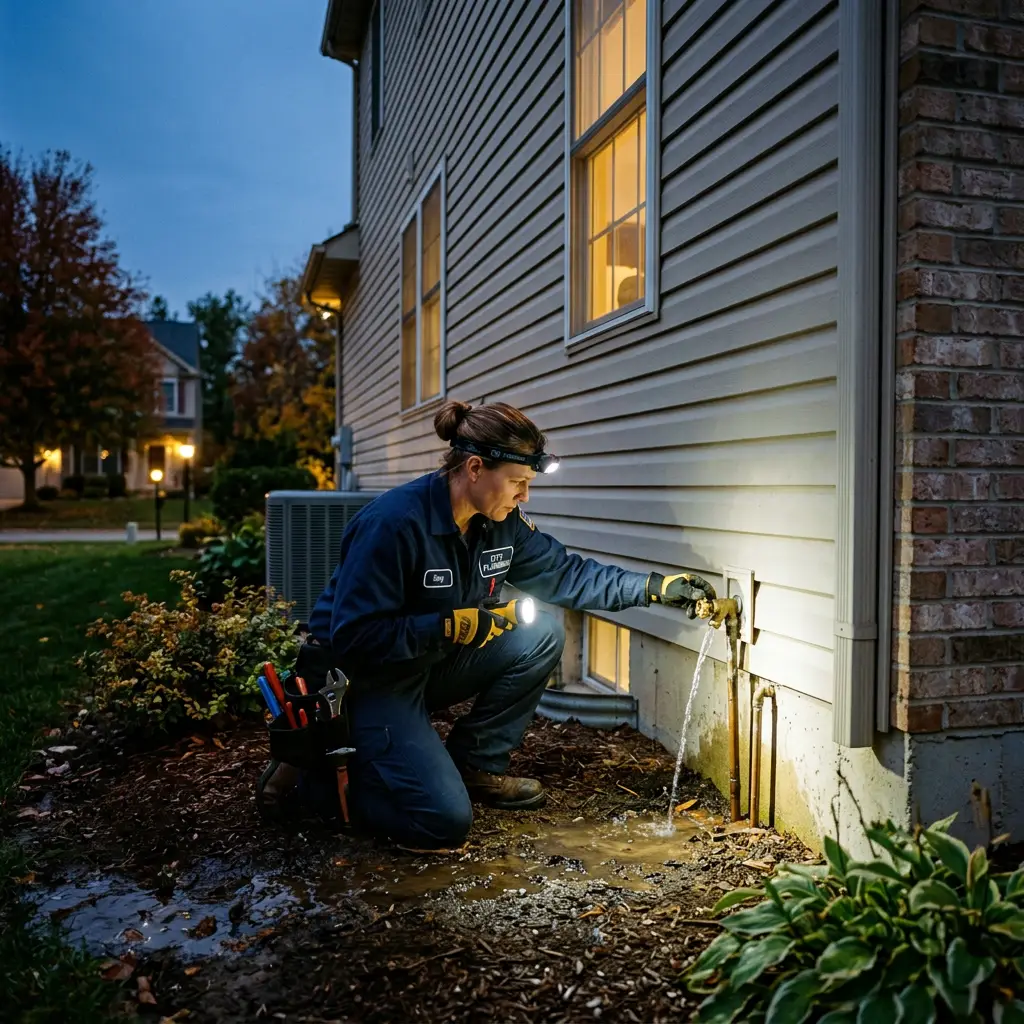
Emergency plumbing for single family homes, from the kitchen to the yard and everything between.
Read about Residential Emergency PlumbingUrgent help for burst pipes, overflowing fixtures and sudden water loss at any hour.
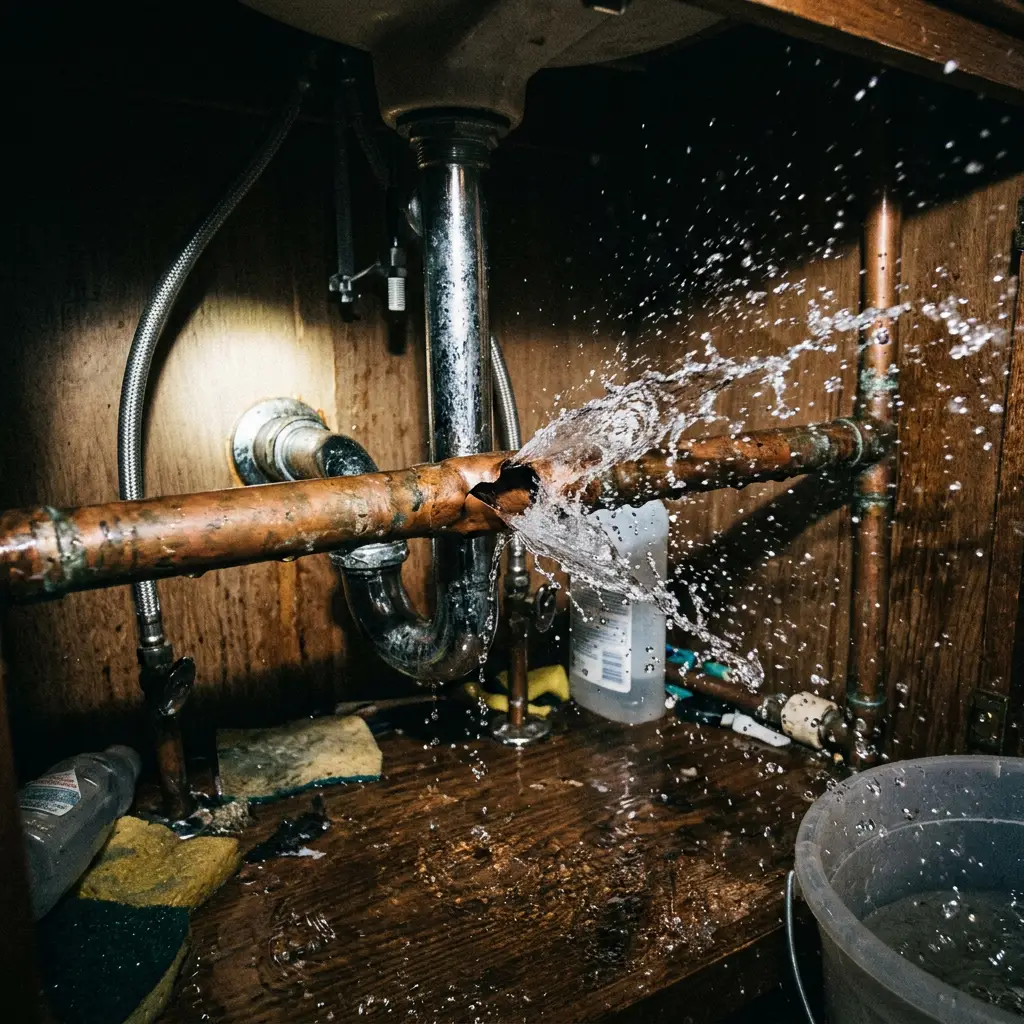
Read about 24 Hour Emergency PlumbingRepair for pipes that burst, split or spray, before water reaches floors, ceilings and walls.
Read about Emergency Pipe Leak RepairTell Emergency Repair Plumbers what is happening in your Contra Costa County home.