Emergency Leak Detection
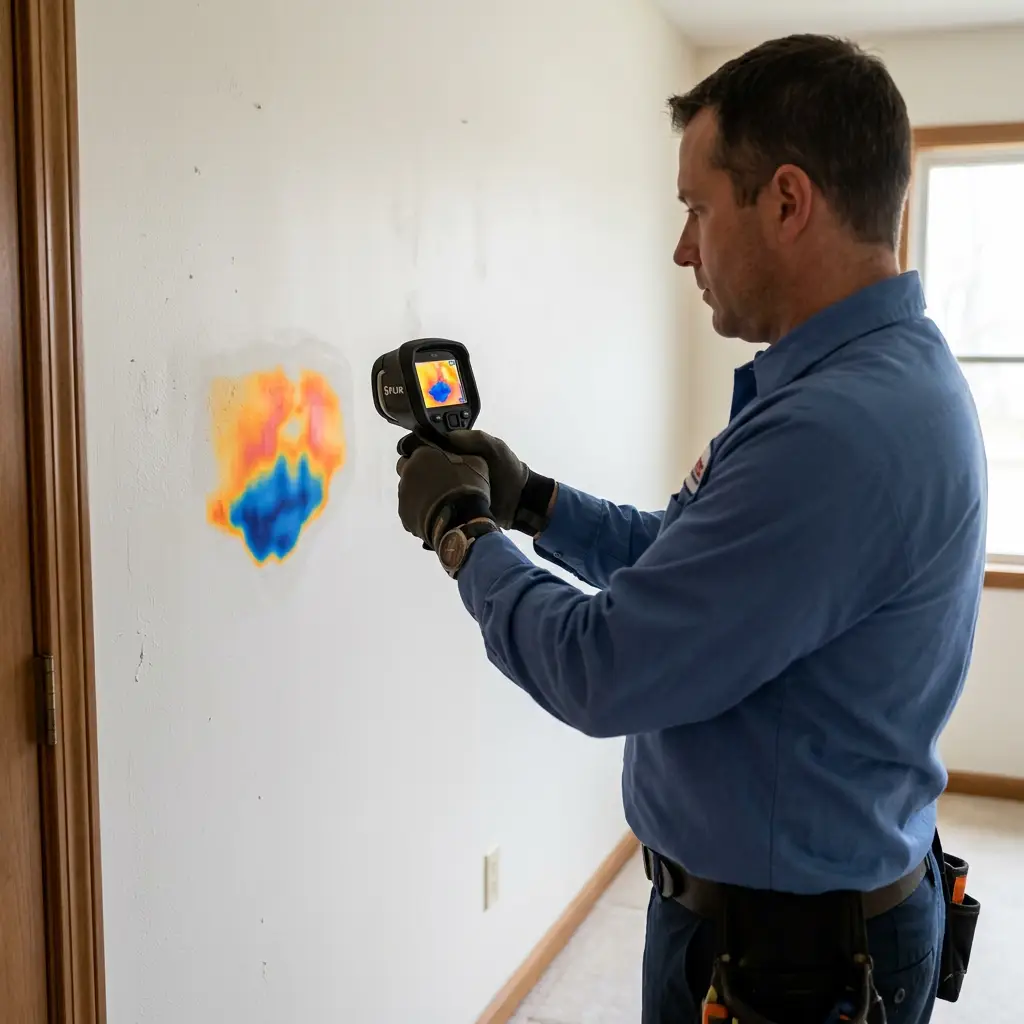
Methodical searching for hidden leaks behind walls, under slabs and along buried lines.
Read about Emergency Leak Detection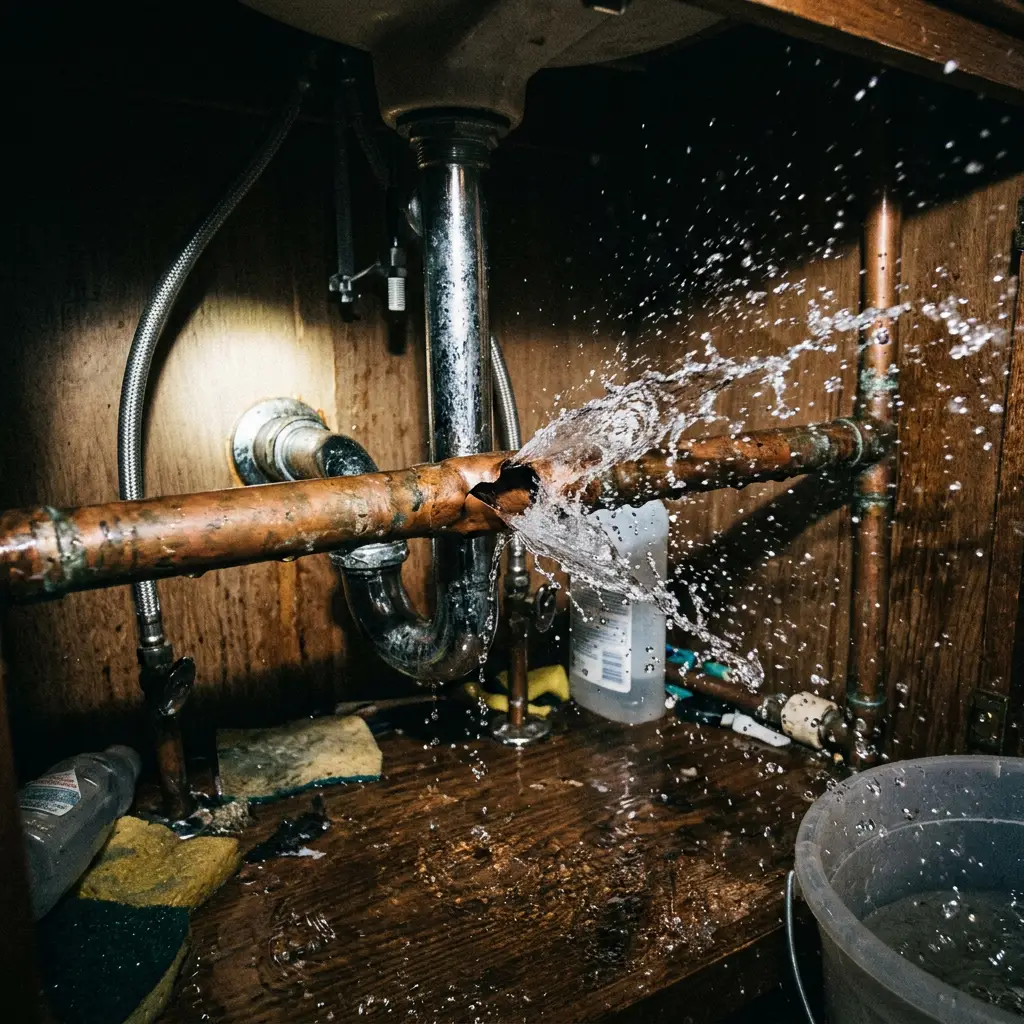
A leaking pipe rarely stays small. Learn how pipe leaks start, what a repair involves and how to hold the damage down while you arrange help.
Pipes fail for several reasons: age, corrosion, shifting soil, high water pressure, a joint that was never seated properly, or a hard freeze in a cold snap. A pinhole leak may only dampen a cabinet floor for weeks, while a split seam can empty a gallon a minute into a wall cavity.
The warning signs are usually visible before the failure. Stains on a ceiling, bubbling paint, a musty smell, a water meter that moves when everything is off, or the sound of running water in a quiet house all point to a leak that needs attention now.
Each situation below falls inside this service. Your problem may touch more than one, and the plumber will sort out which part must be handled first.
Pinholes, split sections and failed soldered joints on copper supply lines.
Cracked fittings and separated joints on modern plastic supply and drain lines.
Rust through on older steel pipes that have thinned from the inside.
Loose couplings, worn washers and connectors that weep or spray.
Water traveling inside walls, ceilings or floors from a hidden source.
The exact work depends on what is found, but an emergency visit generally follows this order.
Water to the damaged section is shut off so that the repair can be done safely.
The plumber opens only what is needed to see the failed pipe or joint.
A damaged section is cut out and replaced, or a failed fitting is renewed.
Water is restored slowly while the repair is watched for any sign of seepage.
Where a pipe is leaking matters as much as how badly. A leak in an exposed basement line is quick to reach, while one inside a finished wall may need a careful opening to avoid unnecessary demolition. Telling the plumber about stains, sounds and the rooms involved lets them plan the access that does the least harm to your home.
Small leaks grow. Water also soaks into framing and insulation where it causes mold and rot, so a leak is worth addressing early.
Look for stains, warped paint, a musty smell and a water meter that keeps turning when every fixture is off.
No. Fixture seals, appliance hoses and water heater tanks also leak, and each has its own service page.
Problems often overlap. These pages cover neighboring situations that homeowners in Contra Costa County run into.
Methodical searching for hidden leaks behind walls, under slabs and along buried lines.
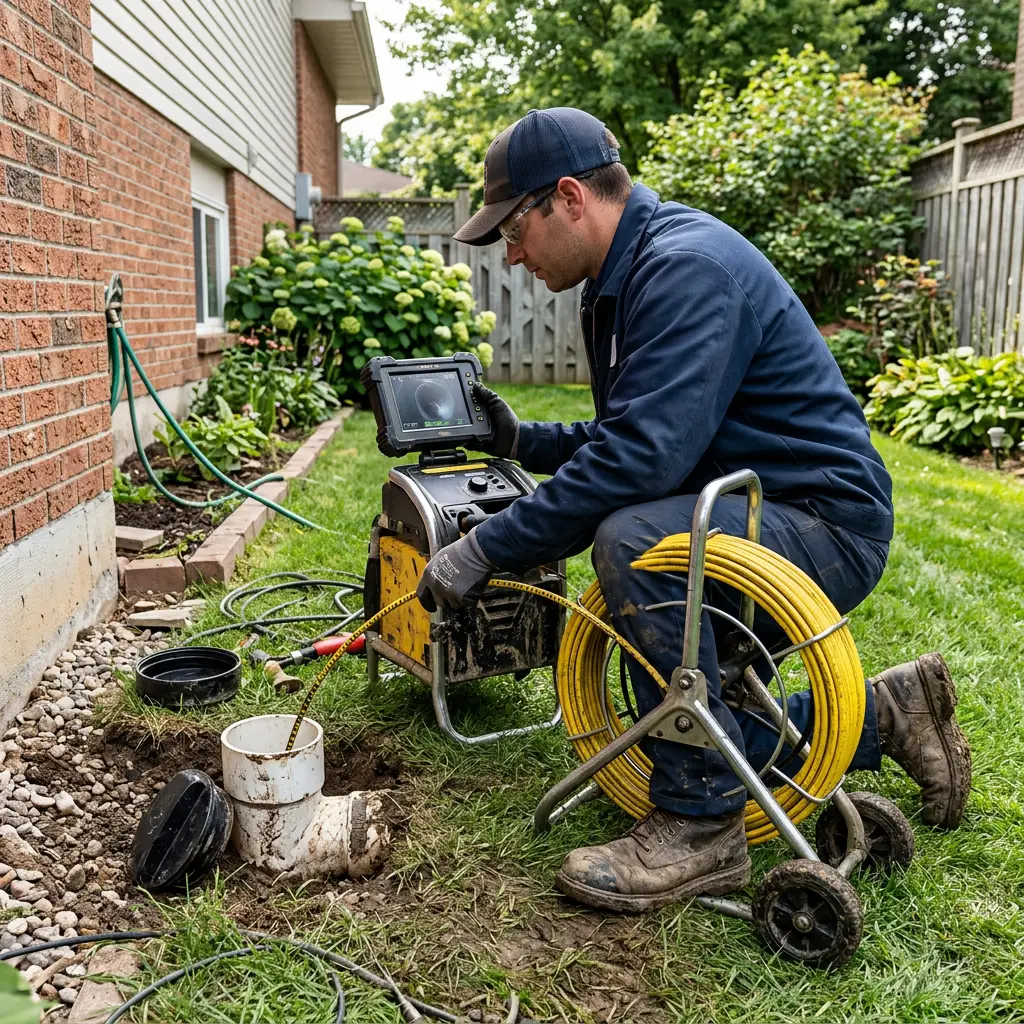
Read about Emergency Leak DetectionHelp for sewage backups, blocked main lines and broken sewer pipes beneath yards and floors.
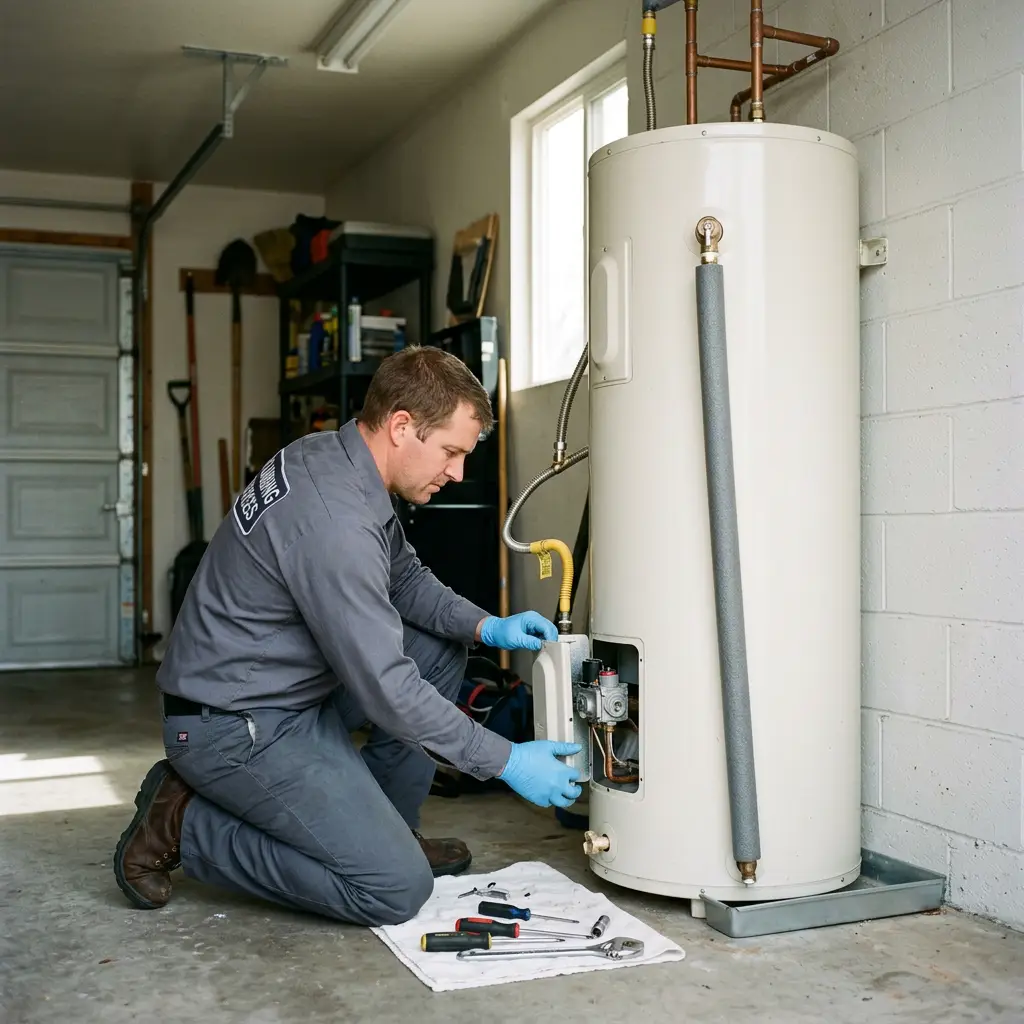
Read about Emergency Sewer Line RepairRepairs for leaking tanks, cold showers and heaters that have failed without warning.
Read about Emergency Water Heater RepairTell Emergency Repair Plumbers what is happening in your Contra Costa County home.